
Search Oregon Deed Records
Oregon deed records track every property transfer across all 36 counties. Each county clerk maintains deed records for land within its borders. These records include warranty deeds, quit claim deeds, trust deeds, and other documents that affect title to real property in Oregon. You can search deed records online through county digital research rooms or visit a clerk office in person. Oregon deed records are public documents, and any person has the right to inspect them. Whether you need to verify ownership or trace a chain of title, Oregon county clerks provide access to deed records going back more than a century.
Oregon Deed Records Quick Facts
How Oregon Deed Records Work
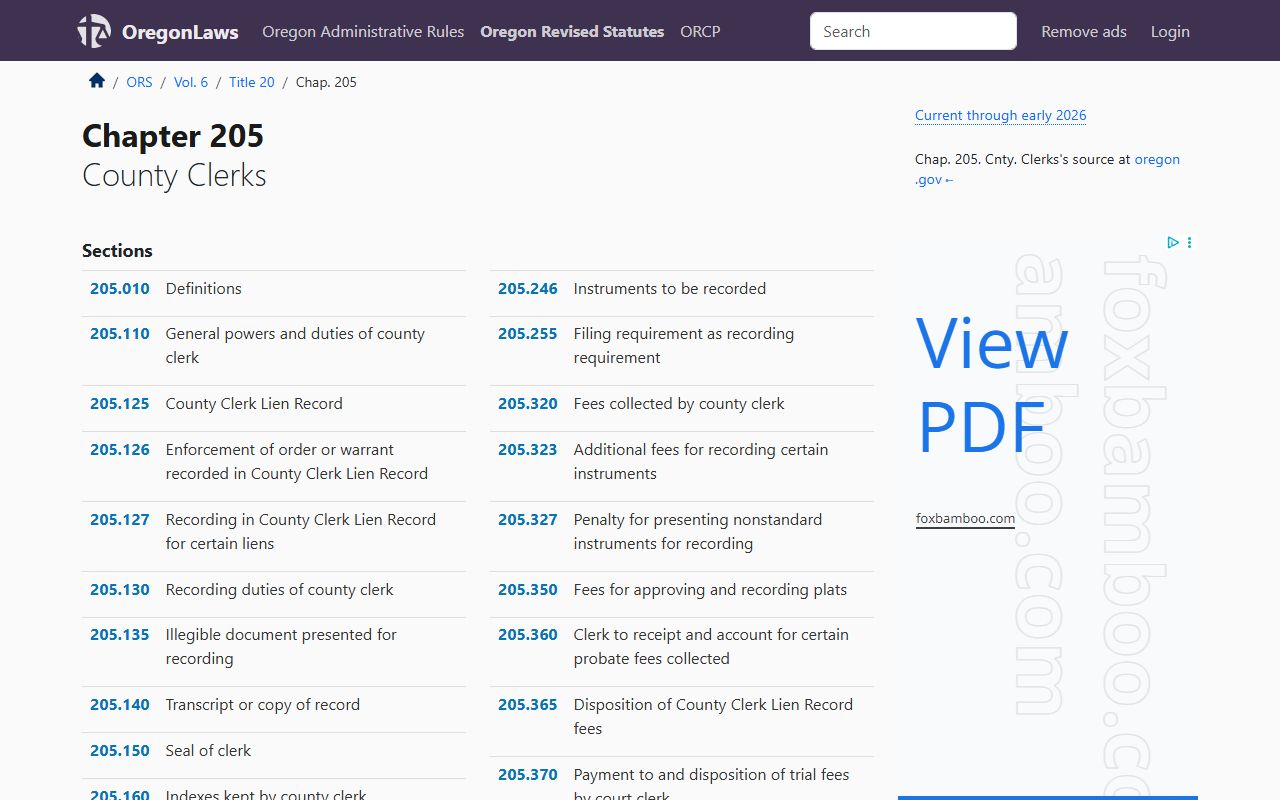
Oregon uses a decentralized system for deed records. Each of the 36 county clerks serves as the official keeper of real property documents within that county. Under ORS Chapter 205, the county clerk has custody of all files and records of deeds and mortgages of real property. The clerk must record every deed, mortgage, power of attorney, and contract affecting the title to real property when properly acknowledged or proved. This means all Oregon deed records flow through local county offices rather than a single state agency.
The county clerk keeps several types of records under Oregon law. Deed and mortgage records form the core of the system. The clerk also maintains statutory lien records and the County Clerk Lien Record for warrants, orders, and other instruments affecting title. Releases, satisfactions, assignments, and amendments of recorded instruments are stored as well. Oregon deed records also include certified copies of death records for any person who appears in county records as owning land or having a claim in property.
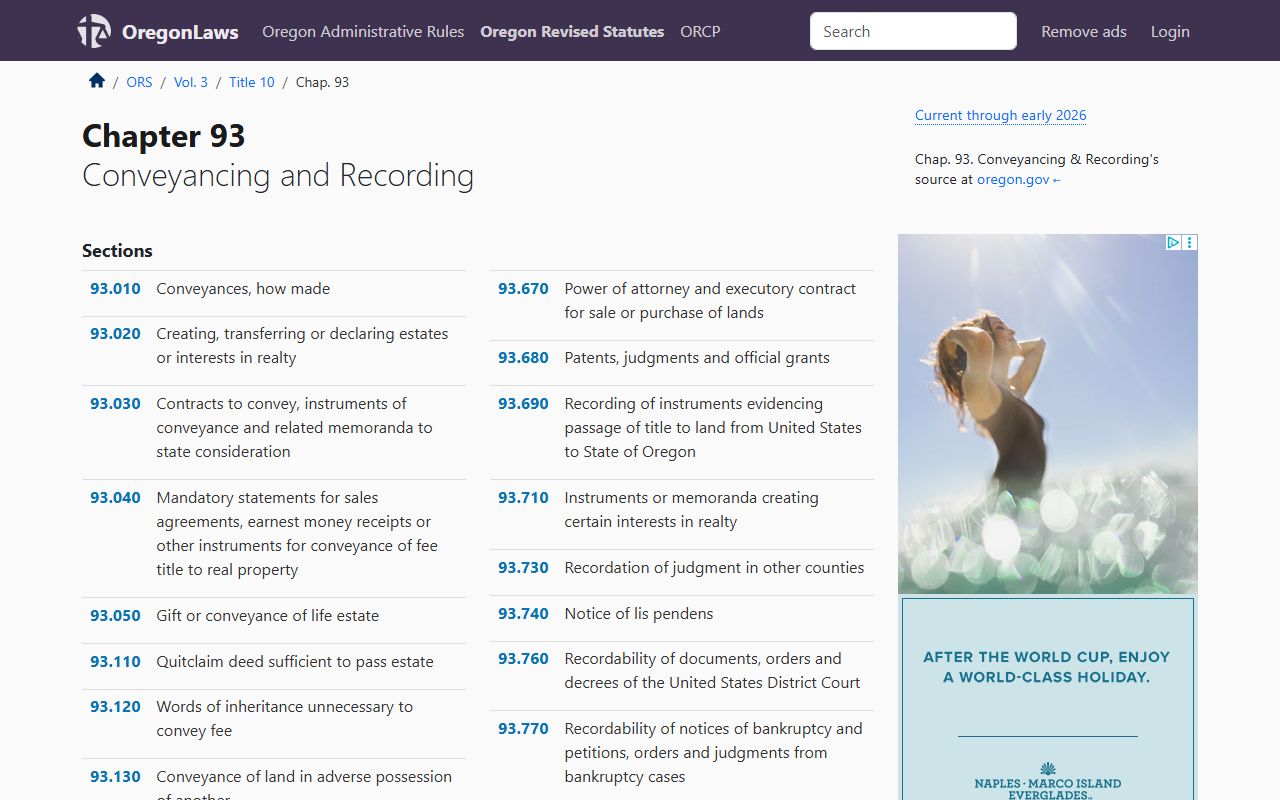
Oregon is a race-notice recording state. This matters for deed records. Under ORS 93.640, any conveyance or deed that is not recorded is void against a later buyer who acts in good faith and records first. This rule gives strong reason to record deed records promptly after a property transfer in Oregon.
The Oregon State Archives holds historical land records from the territorial period through the present. These include donation land claims, homestead records, and early deed records that date back to before statehood.
Search Deed Records in Oregon Online
Many Oregon counties now offer digital research rooms where you can search deed records from home. Multnomah County provides online access to recorded indices from 1965 to the present at their digital research room. Deschutes County offers real property deed records from 1983 onward through their online portal. Wasco County gives free online document search through their digital research room. Each county sets its own level of online access for deed records.
To search Oregon deed records online, you typically need the name of a grantor or grantee, a property address, or a document number. County clerks maintain a direct general index and an indirect general index as required by ORS 205.160. The direct index lets you look up deed records by grantor name. The indirect index searches by grantee. Some county systems also allow searches by legal description or recording date.
Not all Oregon counties have the same digital tools. Smaller counties may require in-person visits or phone requests. Call the county clerk before visiting to confirm hours and what search options they provide for deed records.
Oregon Deed Records Requirements
Oregon law sets strict rules for documents submitted for recording. Under ORS 205.232, the county clerk cannot accept any instrument unless it meets these standards. The paper must not be larger than 14 inches long and 8.5 inches wide. It must be at least 20-pound weight. The text must be printed or typed in 10-point type or larger. A space measuring 4.25 inches wide by 1.75 inches high must be left in the upper right or lower right corner of the first page for the recording label. Documents that fail to meet these rules face a $20 non-standard fee on top of regular recording costs.
The first page of any deed submitted for recording must include specific details under ORS 205.234. These are:
- Names of the transactions
- Names of all parties involved
- Name and address for document return
- True and actual consideration paid for the transfer
- Tax statement mailing information
Oregon also requires that all instruments conveying fee title state the true and actual consideration on the face of the document under ORS 93.030. A deed that lacks this statement will not be accepted for recording by any county clerk in Oregon. The consideration includes cash paid and any existing liens, mortgages, or encumbrances that remain on the property.
Deed Records Fees in Oregon
Recording fees for Oregon deed records are set at the state level under ORS 205.320 and ORS 205.323. The base fee is $5 per page. On top of that, several additional charges apply to each document recorded.
A typical single-page deed costs between $76 and $99 to record depending on the county. The fee breakdown includes the $5 base recording fee, a $1 Oregon Land Information System fee, a $10 Assessment and Taxation fee, and a $60 Housing Alliance Tax. Some counties add a Land Corner Preservation fee of $10 or $11, and a GIS fee that ranges from $5 to $7. Each extra page after the first adds $5. Oregon has no state transfer tax on real property, so these recording fees are the primary cost of filing deed records.
For copies of existing Oregon deed records, fees vary by county. Standard copies at public terminals typically cost $0.25 per page. Certified copies cost more. Multnomah County charges $7.75 for the first page of a certified copy and $0.25 for each additional page. Most counties accept cash, checks, and credit or debit cards, though card payments often carry a convenience fee of around 2% to 2.5%.
Note: Recording fees can change, so contact the county clerk to confirm current costs before submitting deed records in Oregon.
Public Access to Oregon Deed Records
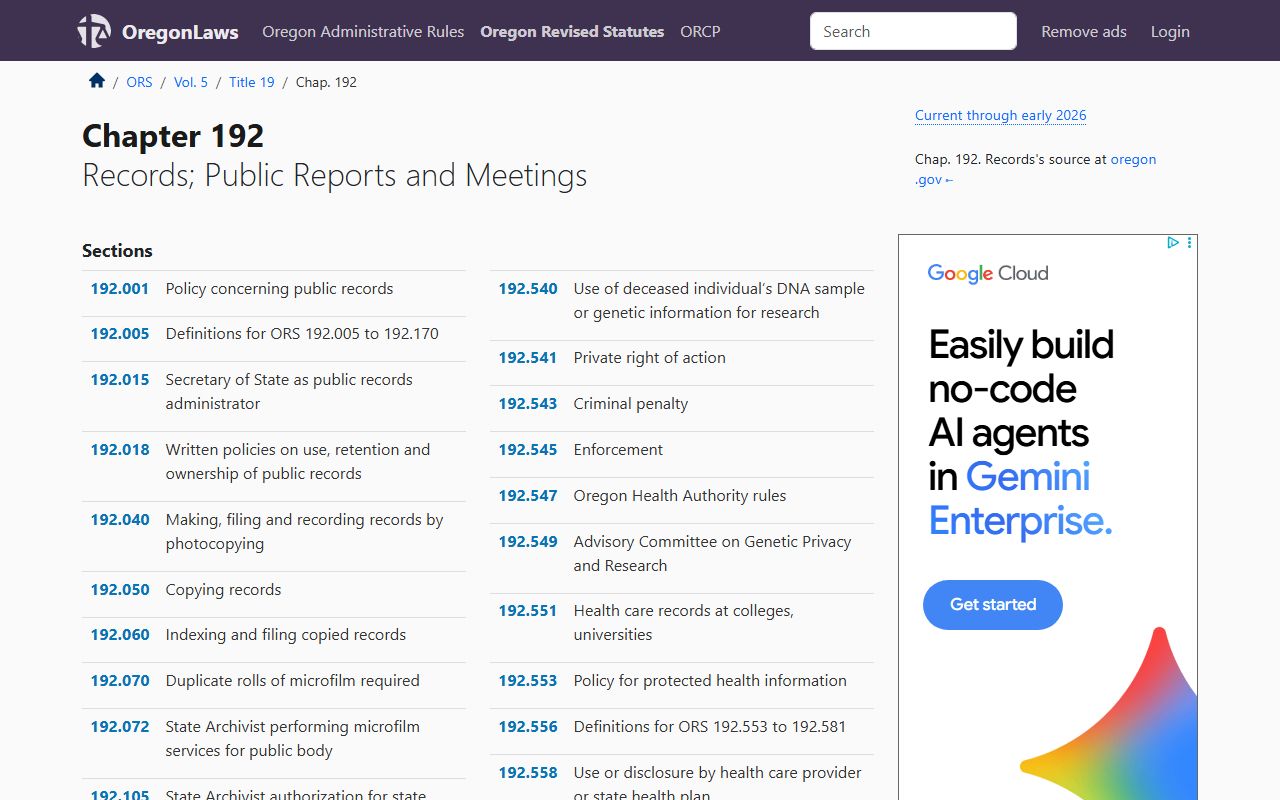
Oregon deed records are public. Under ORS 192.314, every person has a right to inspect any public record of a public body in the state. County clerks who maintain deed records are public bodies under this law. You do not need to give a reason to request access. The records are open to anyone.
The Oregon Department of Justice oversees public records law statewide. If a county clerk denies access to deed records, you can file a petition with the district attorney in that county. The public body must respond to a written request within five business days under ORS 192.324. If the request involves deed records that exist in electronic form, the county must provide them in the format you request if available.
Some limited exemptions exist. Home addresses in deed records may be exempt from disclosure for certain officials who can demonstrate a personal safety concern. But in general, Oregon deed records including warranty deeds, trust deeds, mortgages, and liens are fully open to the public.
Types of Oregon Deed Records
Oregon deed records cover many types of property documents. The most common is the warranty deed, which guarantees clear title from the seller. A bargain and sale deed transfers whatever interest the seller holds. A quit claim deed releases any claim the grantor may have without guaranteeing title. Trust deeds serve as security instruments for mortgage loans in Oregon. Each type is recorded with the county clerk and becomes part of the permanent deed records.
Oregon requires specific disclosure statements in deed records. Under ORS 93.040, instruments transferring fee title must include warnings about land use compensation laws, limits on lawsuits against farming or forest practices, and verification of lawfully established lot status. Oregon also prohibits any deed from containing provisions that restrict property use based on race, color, religion, sex, national origin, or disability under ORS 93.270. Any such provision in deed records is void and unenforceable.
Transfer on death deeds are a special category in Oregon deed records. These documents allow property to pass to a named beneficiary when the owner dies, without going through probate. They are exempt from the consideration statement and disclosure requirements that apply to other deed records.
Electronic Recording of Deed Records
Many Oregon counties accept deed records through electronic recording, or e-recording. This process allows title companies, attorneys, and other professionals to submit documents electronically rather than by mail or in person. E-recording is faster and more efficient than traditional methods for filing Oregon deed records.
Common e-recording vendors serving Oregon counties include Simplifile, CSC eRecording Solutions, and eRecording Partners Network (ePN). Some counties also work with Indecomm Global Services and Hopdox. Each vendor charges its own service fees on top of county recording fees. Contact your county clerk to find out which vendors they accept for deed records.
Washington County accepts electronic signatures and notaries on documents submitted for recording as of January 1, 2020, under ORS 93.804. This makes e-recording even more streamlined for deed records in that county. Other counties may have their own policies on electronic signatures.
Deed Records and Property Tax
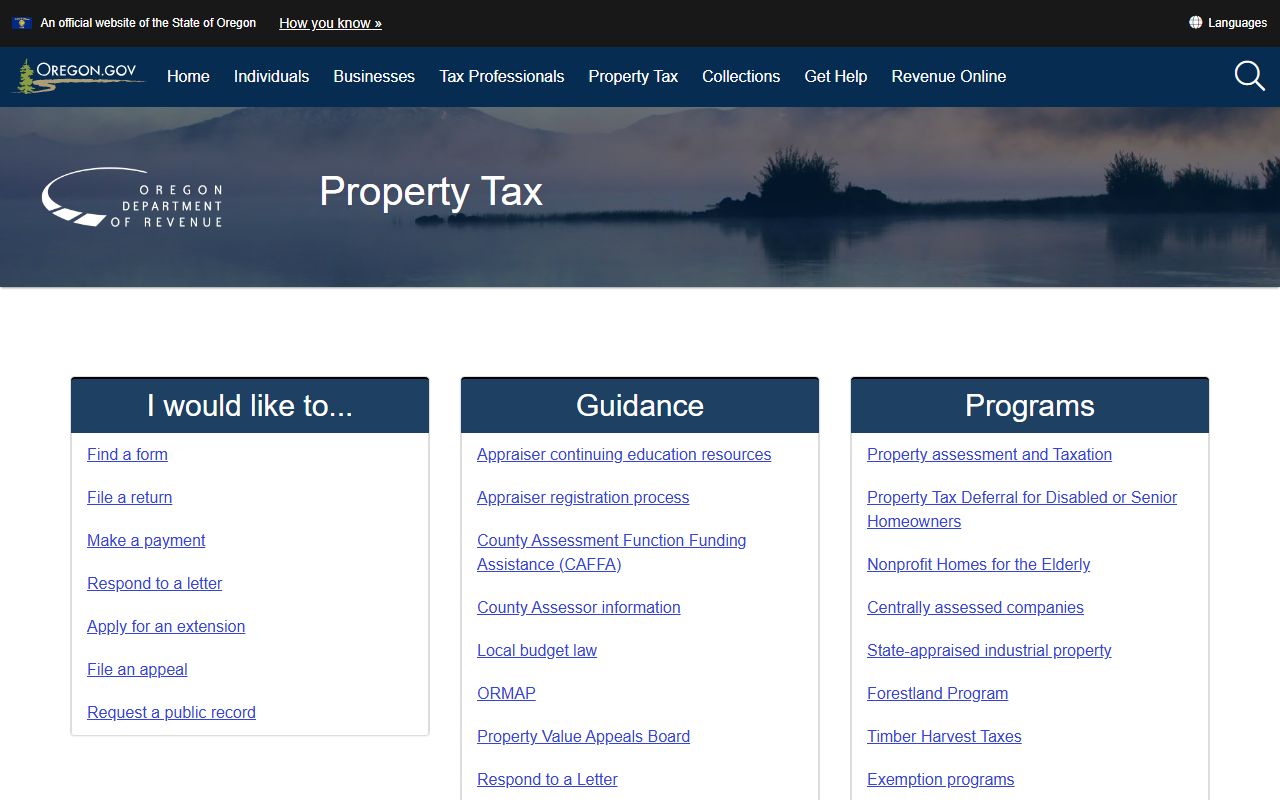
Oregon deed records connect directly to the property tax system. When a deed is recorded, the county assessor updates ownership records and tax rolls. The Oregon Department of Revenue oversees property tax policy statewide, but each county assessor handles local valuations and tax collection.
Oregon has no state transfer tax on real property sales. Only recording fees apply when deed records are filed. This is different from many other states that charge a percentage of the sale price when property changes hands. The lack of a transfer tax keeps costs lower for buyers and sellers recording deed records in Oregon.
The Bureau of Land Management Oregon office maintains federal land records for the state. These include original land patents and survey records that form the foundation of property ownership in Oregon. BLM records can be useful when tracing the earliest deed records for a parcel back to its original transfer from federal to private ownership.
Help With Oregon Deed Records
County clerks across Oregon can guide you through the process of searching or recording deed records. Most offices have staff who can explain what documents you need and how to submit them. However, clerk offices are prohibited from giving legal advice, providing blank forms, or suggesting which type of deed to use. For those questions, consult a real estate attorney.
The Oregon Judicial Department provides court forms and resources for property-related legal matters. The Oregon State Archives can help with historical deed records research, including records from the territorial period. You can reach the archives at 503-373-0701 or by email at Reference.Archives@oregon.gov. Appointments are available Monday through Friday, 8:30 a.m. to 12:00 p.m. and 1:00 p.m. to 4:30 p.m.
Note: Always verify current hours and fees with the specific county clerk office before visiting to access Oregon deed records.
Browse Oregon Deed Records by County
Each county in Oregon has its own clerk office that maintains deed records. Pick a county below to find local resources and contact information for property records in that area.
Deed Records in Major Oregon Cities
City residents access deed records through their county clerk office. Pick a city below to find property record resources for that area.